
- How self-esteem online is affected by envy and social comparison.
- The difference between envy vs jealousy psychology—and why it matters.
- Practical ways on how to deal with envy without guilt or resentment.
- What your envy is really telling you—envy explained as a growth tool.
- Strategies to turn social media envy into motivation instead of anxiety.
It’s 10 PM… and You’re Stuck in the Scroll
You open Instagram “just to check one post.” Thirty minutes later, you’re deep in stories, reels, and highlight reels, noticing people your age traveling, glowing, hitting career milestones, and suddenly… that familiar twinge hits. Envy.
Most people treat envy like a villain: “Don’t feel that—it’s toxic!” But here’s the twist: envy isn’t automatically bad. Psychology says it’s a compass, pointing to what you really want. And in our social media world, where self-esteem online is constantly nudged by likes, comments, and curated posts, it’s normal—and even useful—to feel it.
Study Insight: A Pew Research Center survey found that social media makes 27% of teens feel worse about their own life, while 38% feel overwhelmed by the drama on their feeds. Yep—social media wants your envy.
Envy vs Jealousy: The Psychology Behind the Feelings
Envy and jealousy aren’t the same.
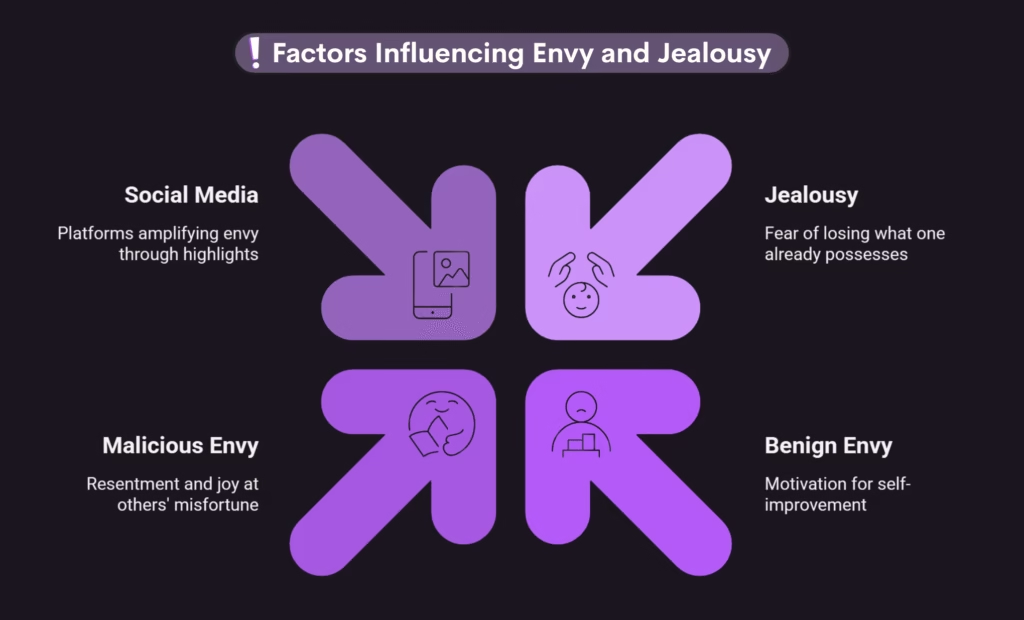
- Jealousy: Fear of losing what you already have.
- Envy: Wanting what someone else has.
It comes in two flavors:
- Benign envy: Makes you want to level up. Motivates growth.
- Malicious envy: Can lead to resentment—joy at someone else’s misfortune.
Research explains that benign envy sparks self-improvement, while malicious envy risks harming relationships and mental well-being.
Social media doesn’t cause envy—but it definitely cranks it up. Those highlight reels, success posts, and filtered snapshots keep us comparing nonstop.
Why Social Media Makes Envy Louder
Imagine an endless hall of mirrors. Every post, every story, every reel is someone else’s “perfect” moment.
- FOMO: Seeing friends’ and strangers’ adventures triggers the fear of missing out.
- Infinite comparisons: There’s always someone doing “more.”
- Algorithmic boosting: Posts that scream success get priority, feeding upward comparison.
Chou & Edge (2012) also found that social media makes people more likely to believe others are happier and more successful than themselves.
It’s not your fault. The platform is designed to make envy louder. But envy can also be a signal—if we pay attention.
Envy as a Mirror: What Is It Telling You?
Instead of shoving envy down or feeling guilty, ask: “Why do I feel this?”
Here’s a little framework I love:
- Identify: What triggered this feeling?
- Decode: Is it about lifestyle, recognition, skills, relationships, or freedom?
- Redirect: Turn the feeling into an action plan—not a grudge.
Example: You envy a friend’s solo trip. Chances are, it’s not their trip itself—it’s freedom, adventure, or spontaneity that you want.
Self-discrepancy theory (E. Tory Higgins, 1987) explains envy as the gap between our actual self and ideal self. Recognizing this gap is the first step toward growth.
Self Esteem Online: How to Turn Envy Into Growth
Good news: benign envy is like a little nudge from your brain saying, “Hey, here’s something you want—go get it!”
Some practical ways to flip envy into action:
- Journal it: Track triggers and figure out what they’re really pointing to.
- Reframe success: Treat others’ achievements as inspiration, not competition.
- Take micro-steps: Big dreams feel overwhelming; start small.
- Collaborate and learn: DM, ask for advice, or team up with people you admire.
Research alert: Psychological Science (2011) found that benign envy increases motivation and effort, especially when self-improvement feels attainable.
Real-life example? Steve Jobs envied Xerox’s tech, then turned that envy into Apple innovation.
When Envy Turns Dark
Not all envy is helpful. Malicious envy can lead to:
- Bitterness and resentment
- Self-sabotage
- Anxiety or depression
Studies show that heavy social comparison online is linked to higher depressive symptoms. Social media can fuel this spiral, especially when envy isn’t reflected upon or redirected.
If you notice envy consistently making you feel bad, it’s okay to pause, step back, reflect, or even take a social media break.
Building a Mindful Relationship With Self-Esteem Online
Here’s the secret: your brain can enjoy social media without letting it control you.
- Curate your feed: Follow inspiring accounts, not ones that frustrate you.
- Celebrate others genuinely: Comparison turns into appreciation.
- Set scrolling boundaries: Time blocks, “no scroll” hours, or notification tweaks.
- Decode envy signals: Every twinge is info about what truly matters to you.
When you do this, social media becomes a tool for insight rather than a trap for self-esteem.
Self Esteem Online: Why Decoding Envy Boosts Mental Health
Using envy as a signal helps you:
- Build clarity on personal goals
- Increase self-efficacy
- Stay motivated in a positive, constructive way
Instead of chasing dopamine hits from likes and comments, you’re chasing growth, awareness, and creativity.
The Takeaway
Next time you feel that little pang of envy, pause. Ask yourself why. Decode it. Turn it into action.
Self-esteem online doesn’t have to suffer. Envy can be:
- A clue
- A compass
- A motivator
That’s way more powerful than mindless scrolling. ✨
Frequently Asked Questions
Upward comparison: You compare yourself to someone doing “better” than you (like a friend’s career or Insta glow-up). Can motivate you—or trigger envy.
Downward comparison: You compare yourself to someone doing “worse” off than you. Often boosts self-esteem but can feel a bit guilty.
Social media creates a constant highlight reel of other people’s lives. Seeing perfect photos, achievements, or vacations can make us feel like we’re “not enough,” lowering self-esteem. But it can also inspire growth if we notice what we want for ourselves and redirect that energy.
Envy: Feeling a little “I want what they have” toward someone else’s success, skills, or possessions.
Jealousy: Fear of losing something you already have, like attention, love, or status.
Think: envy points outward, jealousy points inward.
Yes—and not because we’re “bad.” Social media amplifies envy by showing curated, polished versions of life. Algorithms highlight success, beauty, and milestones, which makes upward comparison and envy easier to feel.
Not always! It depends on how you use it. Mindful scrolling, following inspiring accounts, and remembering that online life is curated can turn envy into motivation, not stress.