
- The real difference between FOMO (Fear of Missing Out) and JOMO (Joy of Missing Out)
- Why social media design is literally built to fuel anxiety and sales pressure
- Simple strategies to practice digital mindfulness without deleting all your apps in a panic
- A reflection checklist to spot when you’re spiraling into FOMO
- How creators and designers can make content that respects attention spans (and your sanity)
You’re lying on the couch in your pajamas, phone in hand. Scrolling. Suddenly, you see it: everyone’s out—friends at brunch, classmates on a trip, influencers announcing another “big moment.” Meanwhile, your big event is deciding which snack goes better with Netflix.
That heavy, sinking feeling in your chest? That’s FOMO (Fear of Missing Out). And thanks to social media, it’s not just a passing thought—it’s everywhere. Notifications, disappearing stories, sales anxiety, trending challenges… all whispering: “You’re falling behind.”
But here’s the twist: choosing not to join in doesn’t have to feel like losing. In fact, embracing JOMO (Joy of Missing Out) can mean more happiness, less stress, and a calmer headspace. It’s about being okay with saying no—without guilt—and actually enjoying your own pace.
And it’s not just theory. 69% of Millennials and Gen Z experience FOMO regularly, and high FOMO levels link to anxiety, burnout, and poor sleep. But JOMO flips the script: it’s linked to mindfulness, self-compassion, and overall well-being.
So maybe… missing out isn’t alwaysa losing. Maybe it’s winning.
FOMO vs JOMO
First things first:
- FOMO (Fear of Missing Out): that anxious itch when you think others are living better lives, going to better events, or achieving milestones without you. It often spikes while scrolling, seeing trips, parties, or trends you didn’t join.
- JOMO (Joy of Missing Out): the exact opposite. It’s the relief of skipping something, guilt-free. It’s not isolation—it’s mindful choice. It’s deciding that your cozy tea and book night matters more than chasing every invite.
On Reddit, one user asked:
“FOMO vs JOMO: Have you ever felt relief from opting out of an event or trend?”
It hit home because many people said missing out didn’t feel like failure—it felt like freedom.
Research backs it: a 2025 study found JOMO is strongly tied to mindfulness and self-compassion, while FOMO is highest among under-18s, slowly declining with age.
Put simply: FOMO feeds comparison, while JOMO feeds calm. One makes you scroll till 3 a.m.; the other lets you enjoy your life without needing validation.
The Psychology Behind FOMO
Why does FOMO feel so… sticky?
It’s not your imagination— it’s just engineered that way. FOMO is rooted in social comparison. We’re wired to measure ourselves against others, and social media amplifies it with every scroll.
Here’s what happens:
- Notifications = micro-rewards. Every like, view, or comment releases a dopamine hit. It feels good, but it also teaches your brain: “Don’t miss the next one.”
- Disappearing content = urgency. Stories that vanish in 24 hours force compulsive checking.
- Peer updates = pressure. Seeing everyone else’s highlight reel makes you feel left out—even if your day was meaningful.
Cue the anxiety loop. You don’t even want to do half the things you’re envy about. But still—your brain says, “what if I fall behind?”
Stats drive this home:
- 72% of people report Facebook as their main FOMO trigger, followed by Instagram (14%) and Twitter (11%).
- High FOMO correlates with anxiety, burnout, and sleep issues.
FOMO isn’t just missing an event—it’s feeling like missing out makes you less. That’s why overcoming it isn’t about ignoring people but reframing your own choices.
How JOMO Protects Your Mental Health
Here’s the good news: JOMO is the antidote.
Instead of chasing every ping, you start asking: “Do I actually want this, or do I feel pressured?” That tiny shift can lower stress, reduce compulsive checking, and ease sales anxiety (that nagging pressure to buy because “everyone else is”).
JOMO in action:
- Saying no to a party and actually feeling relief.
- Choosing a slow weekend offline and feeling energized, not guilty.
- Muting notifications and realizing… nothing bad happened.
Research shows that people who embrace JOMO score higher on mindfulness and self-compassion.
Translation: they stop emotionally beating themselves up for not doing everything—and start enjoying the few things they do choose.
Think of JOMO as protecting your mental space. It’s not about being antisocial—it’s about being intentional. Instead of spreading yourself thin across endless “yeses,” you choose joy in the “no.”
Reflection Checklist: Are You Experiencing FOMO or JOMO?
A soft self-check:
- Did scrolling make me feel anxious or inspired?
- Am I joining because I want to—or because I feel obligated?
- Did I enjoy the moment, or just document it for approval?
- Can I skip this without guilt and still feel okay?
- Am I nurturing offline connections as much as online?
If most answers lean toward anxiety or obligation—you’re in FOMO territory. But if your “no” feels peaceful, you’re stepping into JOMO.
FOMO vs JOMO in Daily Life
This is where it gets real.
- Parties: FOMO says “go or you’ll be forgotten.” JOMO says “your real friends will still like you tomorrow.”
- Trends: FOMO says “join that viral challenge.” JOMO says “does this align with you? If not, let it pass.”
- Work: FOMO says “say yes to everything.” JOMO says “focus on what matters, skip the noise.”
Psychologists note that FOMO can push multitasking and exhaustion, while JOMO nurtures deliberate, mindful choices.
The balance isn’t avoiding all social life, but choosing quality over quantity. Instead of scattering your energy across 20 small random commitments, you put depth into the few that actually matter.
FOMO vs JOMO: Tips for Designers & Creators
FOMO doesn’t just affect people—it’s also baked into design. And designers? You hold that power.
- Intentionality: Cut notification overload. Replace constant alerts with digestible updates.
- Quality > Quantity: Lean into the spacing effect—spaced, high-value posts get remembered more than floods.
- Mindful Spaces: Add soft nudges like “Take a pause” features or content curations that encourage reflection.
- Offline Extensions: Pair content with offline actions—journaling prompts, workshops, real-world tasks.
- Autonomy & Storytelling: Instead of forcing urgency, give users choice. Calm storytelling builds loyalty.
When you design for JOMO instead of people’s fear of missing out, you’re not losing engagement—you’re building trust. And trust is what keeps people coming back long-term.
How to Embrace JOMO Personally
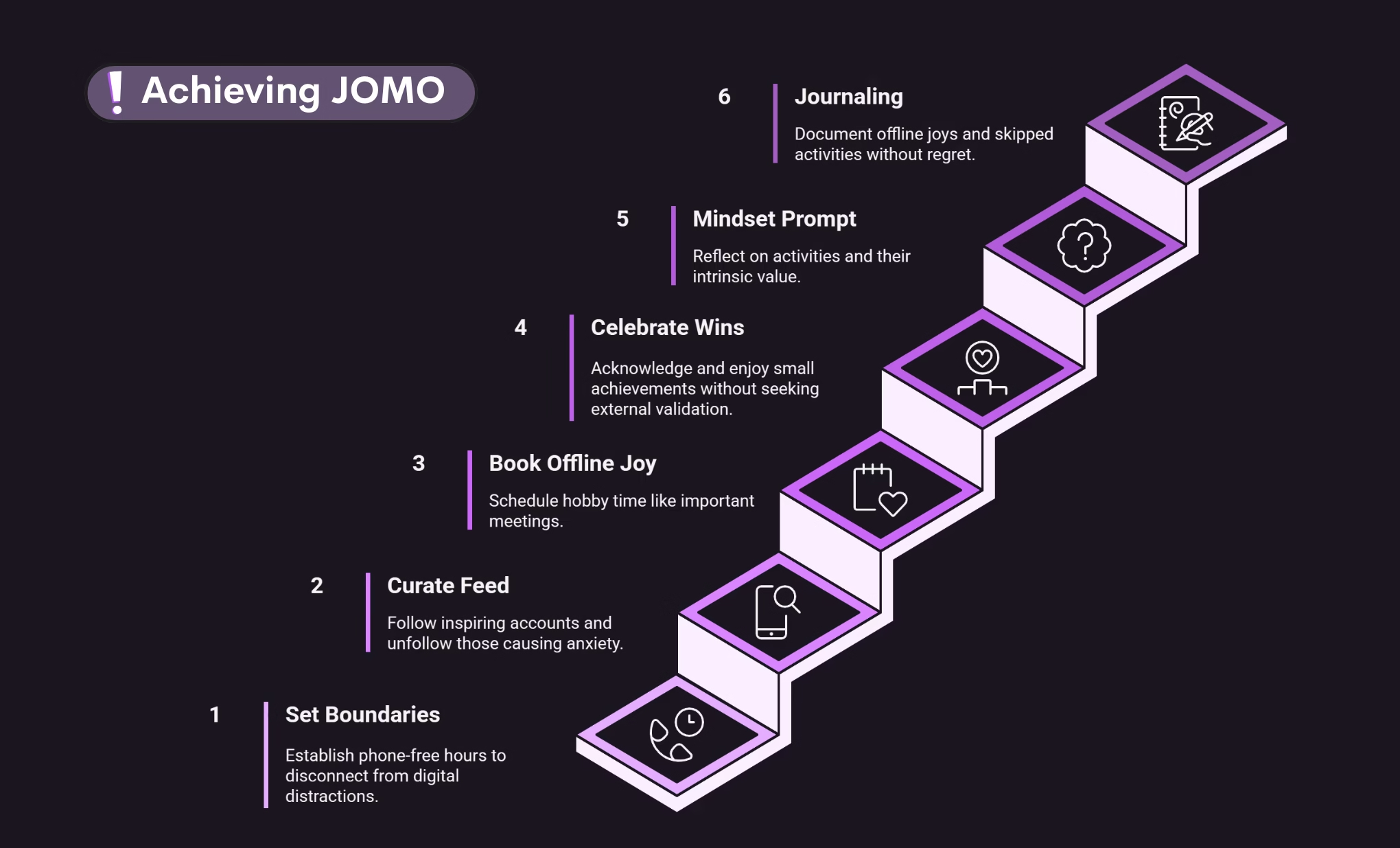
Ready to try it yourself? Here’s your mini playbook:
- Set boundaries. Schedule phone-free hours (meal times, bedtime).
- Curate your feed. Follow accounts that inspire calm, unfollow ones that spark anxiety or sales pressure.
- Block “offline joy.” Book hobby time like you’d book meetings—reading, baking, painting.
- Celebrate small wins. Savor cooking dinner or enjoying a walk instead of needing validation.
- Mindset prompt: Ask, “Would I still do this if no one knew?”
Try journaling:
- “What brought me joy offline today?”
- “What did I skip without regret?”
These small practices make JOMO less abstract—it becomes a daily lifestyle, not just a concept.
Risks of Too Much FOMO
If left unchecked, chronic FOMO can spiral:
- Anxiety and constant restlessness
- Burnout from over-committing
- Poor sleep quality from late-night scrolling
- Reduced focus at work or school
- Sales anxiety—buying things just to keep up
Occasional FOMO is normal. But if your self-worth is tied to staying “in,” it’s time to step back. Recognizing the pattern is the first step to shifting toward JOMO.
Thanks for reading so far! Want to learn more about digital self care rather than doomscrolling? You’ll love this article (bonus infographic included in it). ✨
FOMO vs JOMO: Conclusion
FOMO isn’t harmless—it drains your time, peace, and joy, whether it’s about shopping or life. But JOMO isn’t about “missing out”—it’s about choosing meaning, calm, and connection on your terms.
This isn’t about ditching the internet or ghosting your friends—it’s about curating your energy. Choosing peace over panic. Depth over distraction.
The truth? The most important moments aren’t the ones you post. They’re the ones you actually live.
Next time you feel that anxious pull, pause. Ask yourself: “Do I actually want this, or am I scared to miss out?”
Your life isn’t a feed. It’s messy, beautiful, and uncurated. It’s your story—and you get to write it.
Frequently Asked Questions
FOMO (Fear of Missing Out) is the anxiety you feel when others seem to be having experiences you’re not part of—often fueled by social media. JOMO (Joy of Missing Out) is the opposite: finding peace and happiness in skipping events, scrolling less, and focusing on what truly matters to you.
FOMO is about fear, pressure, and comparison—constantly checking what you might be missing. JOMO is about freedom, choice, and calm—deliberately stepping back and enjoying the present without guilt.
To shift from FOMO to JOMO, set boundaries with social media, curate your feeds for positivity, and practice mindfulness. Instead of asking, “What am I missing?” ask, “What do I actually enjoy doing right now?” That tiny reframe builds joy instead of stress.
Choosing to stay in on a Friday night, sipping tea, and watching your favorite show instead of stressing about missing a party—that’s pure JOMO. It’s about enjoying your choice without the weight of comparison.
Yes! JOMO is self-care. It reduces stress, helps protect mental health, and encourages slow, mindful living. By choosing rest, hobbies, or offline joy, you’re giving your mind the reset it craves.