
- Why online engagement in winter feels quieter — and why that’s not disengagement.
- How reduced light, muffled sounds, and colder days shape online engagement in winter
- The subtle science of emotional compression and how digital emotional expression shifts in winter
- Why familiar content and slower consumption feel comforting during the colder months
Everyone is still posting.
The feeds are full. Stories keep updating. Notifications don’t stop.
And yet, something feels different.
Scrolling in winter feels quieter. Not empty. Not inactive. Just softer.
Posts are there, but they don’t land the same way. Comments are fewer. Reactions feel restrained. Even high-energy content seems to arrive with less noise.
It’s a strange feeling — like the internet is whispering.
This isn’t a drop in interest or motivation. It’s a shift in online engagement in winter, shaped by how the brain responds to colder, darker environments. Winter doesn’t remove people from digital spaces. It simply turns the volume down.
Winter Changes Our Senses Before It Changes Our Screens
Before winter affects how we behave online, it changes the world around us.
We stay indoors more. Windows stay closed. The outside soundtrack fades — fewer birds, fewer insects, fewer passing sounds. In places with snow, sound itself feels muffled, absorbed by thick air and white ground. Even cities seem quieter, wrapped in cold.
Light fades earlier. Days feel shorter. Darkness arrives faster.
The brain is deeply responsive to these environmental cues. When sensory input decreases — less sound, less movement, less light — the mind naturally slows and turns inward. This shift doesn’t stay offline. It follows us onto our screens.
Winter reduces stimulation.
And reduced stimulation changes digital emotional expression.
This is one of the simplest reasons why winter feels so quiet online: the atmosphere itself becomes quieter first.
Online Engagement in Winter: The Biology Behind the Quiet
There’s also a biological reason this shift feels so noticeable.
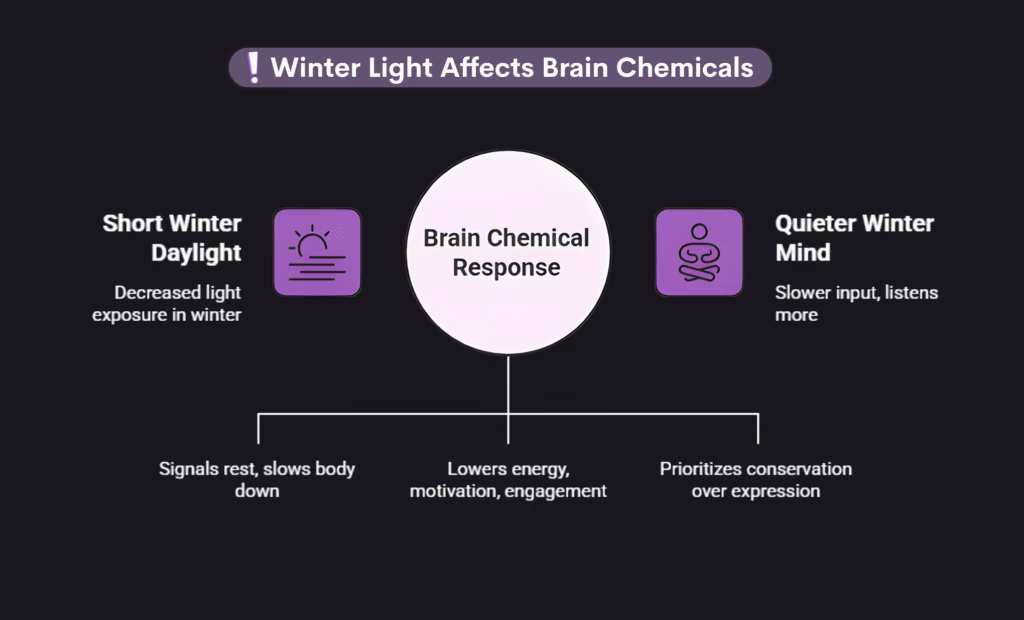
Our bodies run on internal clocks called circadian rhythms — daily cycles that regulate sleep, alertness, energy, and mood. These rhythms rely heavily on light. When daylight decreases in winter, that clock shifts.
Two key brain chemicals respond to this change:
Melatonin, located in the Pineal Gland, is the hormone that signals rest. As daylight shortens, melatonin is released earlier in the evening, encouraging the body to slow down and turn inward.
Serotonin, made in the Raphe Nuclei (brainstem), is linked to energy, motivation, and outward engagement. Lower light exposure can reduce serotonin activity, which subtly lowers the drive to perform, react, and broadcast emotion.
At the same time, the nervous system leans away from high alertness and toward regulation. The body prioritizes conservation over expression.
This doesn’t make the mind dull.
It makes it quieter.
When the brain isn’t primed for high arousal, it prefers slower input. It listens more than it reacts. It absorbs more than it announces. Online engagement in winter mirrors this internal state.
Online Engagement in Winter: Emotional Expression Becomes Quieter
In winter, the brain enters a gentle conservation mode. This doesn’t mean people feel less — it means they express less.
Emotions don’t disappear.
They compress.
Instead of reacting outwardly, people process internally. Instead of commenting immediately, they think. Instead of posting emotional responses, they sit with them.
This is emotional expression online changing shape, not disappearing.
You might notice it as:
- more scrolling, fewer comments
- more saving, less liking
- more private sharing, less public reaction
Winter encourages emotional privacy. People still feel deeply, but they don’t always want those feelings visible. Digital emotional expression becomes quieter, slower, and more selective.
That’s why online spaces can feel muted, even when activity remains high. The volume hasn’t vanished — it’s just been lowered.
Why Novelty Feels Less Appealing in December
Winter brains don’t crave stimulation the way summer brains do.
New trends, loud hooks, and fast-paced content demand energy. In winter, the brain prefers familiarity. Predictable formats feel safer. Familiar voices feel comforting.
This isn’t boredom.
It’s regulation.
Psychologically, this is known as low-arousal emotional processing — a state where the mind favors calm, reflection, and internal coherence over excitement. When energy is limited, the brain chooses what feels steady over what feels stimulating.
That’s why people return to the same creators, the same content styles, the same digital routines. Online engagement in winter becomes slower, calmer, and more reflective. People consume thoughtfully instead of reacting instantly.
The internet feels quieter because attention has become gentler.
Quiet Engagement Is Still Real Engagement
One of the biggest misunderstandings online is equating visibility with care.
Likes and comments are expressive behaviors — but they aren’t the only signs of connection. In winter, engagement often shifts into quieter forms:
- saving posts to return to later
- re-reading content
- sending links privately instead of commenting publicly
These behaviors reflect deeper processing. Winter encourages inward attention, not performance. Digital emotional expression becomes more internal, more personal, and less broadcasted.
So when creators wonder why winter feels so quiet, the answer isn’t disinterest.
Winter doesn’t make people disengaged.
It makes them less performative.
Darkness Slows Time — and Thought
Reduced daylight also changes how we experience time.
Evenings feel longer. Nights stretch. Thoughts linger. Without constant light cues, the brain doesn’t rush as much. It wanders, loops, and reflects.
This affects how we scroll.
People scroll later at night. More slowly. With less urgency to react. Instead of responding instantly, they absorb. Instead of commenting, they reflect.
Darkness creates space for thought. And when thinking deepens, expression often pauses. The internet feels quieter because people are processing more than they are announcing.
The Internet Isn’t Smaller — Just Softer
Winter doesn’t shrink digital spaces. It softens them.
People are still present. Still reading. Still watching. Still feeling. But much of that experience stays internal. Emotional expression online shifts from outward display to inward experience.
The volume lowers.
The pace slows.
Quiet doesn’t mean empty.
It means inward.
This is the heart of online engagement in winter: less noise, more depth.
Online Engagement in Winter: A Gentle Note for Creators
Winter isn’t the season for forcing energy.
When responses soften, it doesn’t mean content isn’t landing. Often, it means it’s landing somewhere thoughtful.
This is a season where:
- calm feels more trustworthy than hype
- clarity feels better than urgency
- softness builds stronger connection than noise
Meeting winter minds means allowing space, not demanding reaction. Let the volume stay low. Let attention move at its natural pace.
The Quiet Is the Point
If the internet feels quieter right now, it’s not because people are disappearing.
It’s because they’re turning inward.
Winter doesn’t silence the internet.
It lowers its voice.
And in that quieter space, reflection deepens, emotions settle, and attention becomes more intentional.
Winter may be softer —
but curiosity doesn’t hibernate.
If you’re here, reading slowly and thoughtfully, you’re already choosing a winter that’s both cozy and intelligent. And that’s not disengagement.
That’s depth. 🕯️❄️
Frequently Asked Questions
Winter makes people more inward-focused. With less daylight and stimulation, emotions don’t disappear — they become quieter and more reflective, which changes how people show emotional expression online.
Reduced sunlight slows circadian rhythms and lowers sensory input. The brain shifts into a calmer, conservation-focused state, which explains why winter feels so quiet mentally and emotionally.
💭 Why does online engagement drop in winter?
Online engagement in winter looks lower because people interact more passively. They scroll, save, and observe more than they comment or share.
Winter encourages subtle digital emotional expression rather than high-energy posting. People feel deeply but express it softly.
As people spend more time indoors and less time socializing, digital spaces reflect that slower rhythm. The quiet isn’t absence — it’s seasonal emotional alignment.