
- Hyperfixation isn’t just a quirk — it can come from anxiety, neurodivergence, or the pressure to “be good” fast.
- Hobby burnout is real, especially when we tie our worth to productivity.
- The chaotic cycle might actually be part of a deeper journey: self-discovery.
- You’re not flaky. You’re learning who you are. And that’s powerful.
The Rise of the “Hyperfixation Era”
Ever bought everything for a new hobby and dropped it two weeks later?
Congrats, you’re officially in your hyperfixation era.
It’s the phase where you’re obsessed with crocheting at 3AM, trying 12 drink recipes in one day, or reorganizing your room with Pinterest-worthy vision boards… until poof! you’re over it.
But this isn’t just a random Gen Z trend. There’s actual psychology behind it.
What Actually Is Hyperfixation?
At its core, hyperfixation is intense focus, almost tunnel vision, on one specific thing for a period of time. It’s often discussed in the context of ADHD or autistic traits, but it can also happen to anyone under stress, burnout, or deep emotional need.
It feels like:
- Losing track of time while doing something
- Constantly thinking about your “thing” (drawing, baking, Greek mythology…)
- Feeling low or irritable when you can’t do it
- Abandoning it completely once the dopamine wears off
And here’s the tea: the modern world is built to trigger it.
Social media thrives on ✨micro-obsessions✨ — aesthetics, trends, tutorials, niche fandoms. It feeds us an endless buffet of new things to try, love, drop, and repeat.
Hobby Burnout Is Real (And It’s Not a “You” Problem)
After the high of hyperfixation, many Gen Zers feel hobby burnout — the dreaded crash.
Why? Because somewhere along the line, a soft hobby became a performance.
We romanticize passion… but also expect:
- To be instantly good at it
- To monetize it
- To make a perfect aesthetic account for it
- To constantly improve
Suddenly, your cozy habit becomes a pressure.
And when you don’t feel “productive” enough, you crash, and blame yourself.
But let’s be clear: you’re not broken. You’re tired. The system told you that your worth = your output. But that’s a lie.
The Psychology of Hyperfixation
Let’s zoom in deeper:
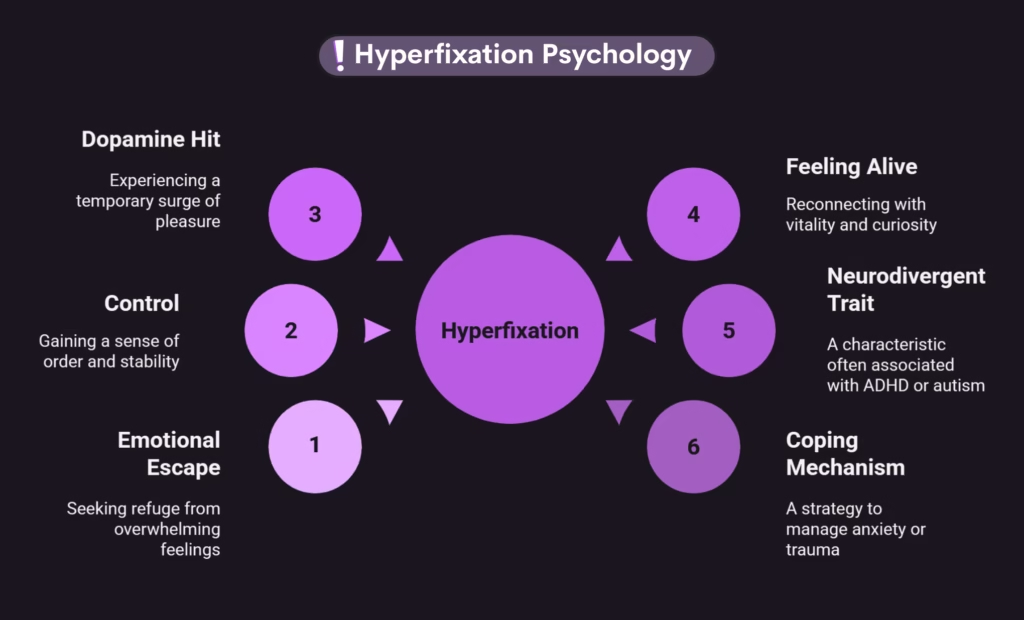
It’s an Emotional Escape
When the world feels overwhelming (hello, climate anxiety, digital doomscrolling, academic pressure), we seek control. Hyperfixating gives you structure, clarity, a dopamine hit — even if temporarily.
It’s a Way to Feel Something
Hobbies become lifelines. They make you feel alive, curious, and excited again. That’s valid. We’re in an age of emotional numbness — any spark feels golden.
It’s a Neurodivergent Trait — But Not Just That
While hyperfixation is often linked with ADHD or autism, it’s also a coping mechanism for many neurotypical people experiencing anxiety, OCD tendencies, or trauma. It’s your brain whispering:
“Here’s a safe obsession. Stay here awhile.”
Hyperfixation: Are You a Flake or Just a Human in Self-Discovery Mode?
Here’s where we break the cycle of shame:
You are not flaky for dropping hobbies.
You are not a failure for not becoming the next crochet influencer.
Every hobby, even if temporary, taught you something like:
- That you love soft textures
- That making things with your hands calms your mind
- That you hate measuring flour
That’s not failure. That’s self-discovery in real-time.
The journey is chaotic, messy, magical — and it’s yours.
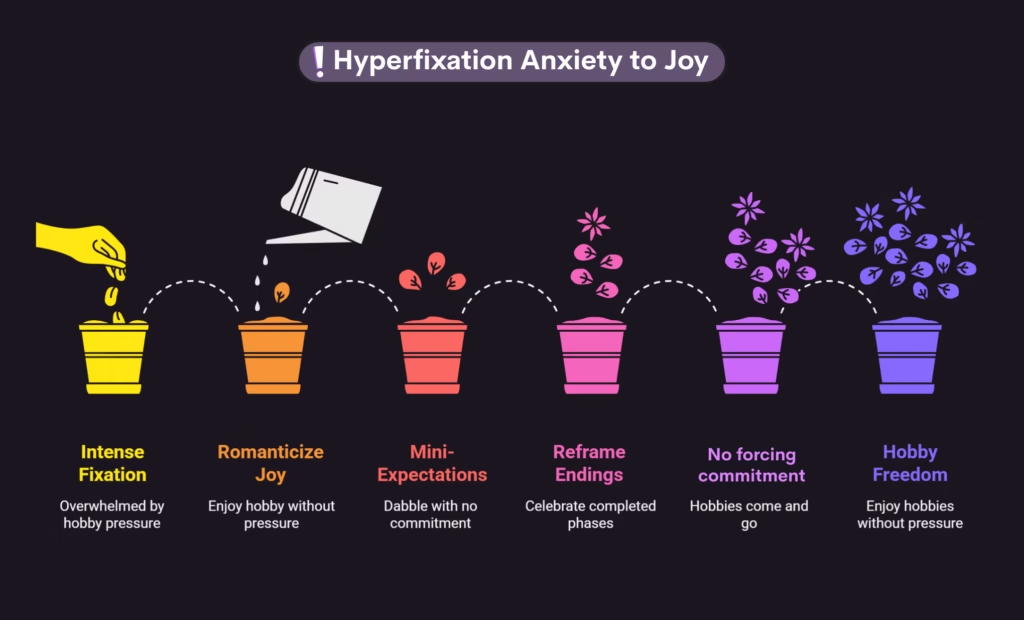
So… How Do You Stop Hyperfixation Anxiety?
Let’s talk solutions:
✅ Romanticize without the pressure
Do the hobby because it brings you joy. Not because you “should” be productive.
Make a cozy playlist. Light a candle. Romanticize the vibe — not the outcome.
✅ Set mini-expectations
Give yourself permission to dabble. Say:
“I’ll try this for 3 days. If I love it, I’ll keep going. If not, that’s okay.”
✅ Reframe endings as wins
Finished a hyperfixation? Celebrate it. You lived a whole life phase.
Make a memory board. Take pictures. Write a note to “past you.”
Turn the end into art.
✅ Don’t force long-term commitment
The hobby doesn’t define you.
Let hobbies come and go like seasons. That’s part of being alive.
The Real Plot Twist: This Is All Part of Becoming “You”
Think of hyperfixations like side quests.
Each one, no matter how random or short-lived, brings you closer to your main character arc.
You weren’t wasting time learning guitar or trying calligraphy or baking 37 muffins.
You were building a mosaic of identity.
You were collecting:
- Sensory joys
- Emotional safety
- Life lessons
- Little glimmers of “home”
So yes, you’re in your hyperfixation era.
And yes, it’s helping you become someone incredible.
Feeling the burnout? Maybe what you need isn’t discipline — but digital self care.
→ You Deserve Better Than Doomscrolling: Try Digital Self Care
Final Words
You don’t have to be good at something for it to matter.
You don’t have to commit forever to prove it was worth it.
You are allowed to explore, love and let go.
You are allowed to be soft and curious.
You are allowed to be a beautiful work-in-progress.
Here’s to loving the mess, the spark, and the next hyperfixation.
Frequently Asked Questions
Hyperfixation is when your brain locks onto something—like a hobby, topic, or interest—and you can’t stop thinking about it. It feels exciting, intense, and all-consuming.
Nope! While it’s super common in ADHD, anyone can experience hyperfixation—especially during stressful or transitional times. It’s your brain’s way of finding comfort or stimulation.
If you’re spending most of your time obsessing over one thing, losing track of time, and feeling emotionally attached to it—it might be a hyperfixation. Bonus hint? You keep info-dumping about it to your friends.
Absolutely. Even things you love can start feeling exhausting if you don’t rest or diversify. Hobby burnout happens when passion turns into pressure.
You might be mentally exhausted, hyper-fixated out, or simply evolving. It’s okay if something that once brought joy doesn’t anymore. You’re not broken—you’re growing.