- How social rewards psychology makes tiny online wins feel like confetti for your brain.
- Why celebrating small wins on social media can boost motivation, mood, and self-confidence.
- The link between micro-celebrations and healthy habit formation in your digital life.
- How to flip your social media feedback loops into a positive, empowering experience.
- Cross-cultural insights: why the same “likes” or shares can mean different things around the world.
You post a sketch, a tiny project, or even that breakfast photo you spent five minutes styling. A few likes roll in. And suddenly… confetti explodes in your brain.
It’s not just in your head. A 2016 fMRI study showed that when teens saw Instagram photos with more likes, parts of their brain tied to reward and social processing lit up. Even neutral or risky photos triggered it. In short: micro-celebrations feel amazing because our brains are wired to respond to them.
That’s social rewards psychology in action—the reason tiny online acknowledgments motivate us and light up our mood. But here’s the twist: it can either be a spark or a trap, depending on how you use it.
Small Wins Theory: How Tiny Achievements Work
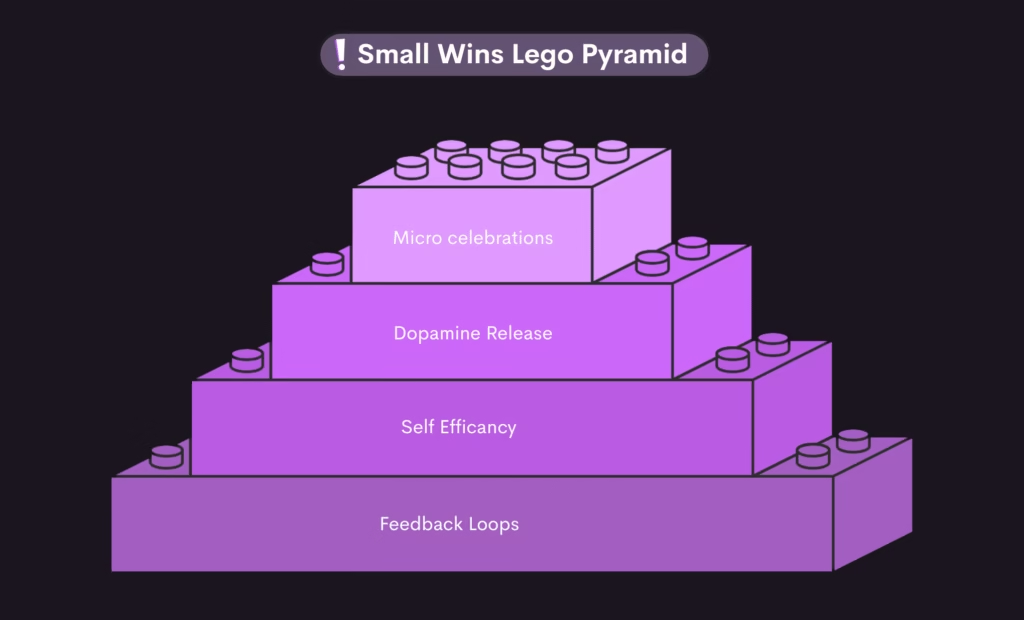
Small Wins Theory says even tiny accomplishments trigger real psychological benefits: dopamine release, motivation, and a sense of progress. It’s like stacking little Lego bricks—each one seems small, but together they build something meaningful.
Online, micro-celebrations happen constantly:
- Likes and hearts
- Comments cheering you on
- Story reactions
Cognitive benefits include:
- Sense of progress → “I’m moving forward”
- Self-efficacy → “I can do this”
- Positive feedback loops → motivating continued effort
Each nudge is a tiny dopamine shot, creating a feedback loop. You post, your brain rewards you, and you’re more likely to create again. Over time, this builds self-efficacy and a gentle sense of mastery.
Example: You post a doodle. Fifteen likes later, you feel inspired to create a larger project. Your brain basically says, “Yes. This felt good—do it again.”
Social Media Feedback Loops: Celebration or Comparison?
Platforms are engineered for micro-celebrations:
- Instagram: likes, reactions, saves
- TikTok: view counts, shares, comments
- LinkedIn: celebrating small professional wins
The upside: Each nudge reinforces positive behavior, boosts creativity, and fosters a sense of connection.
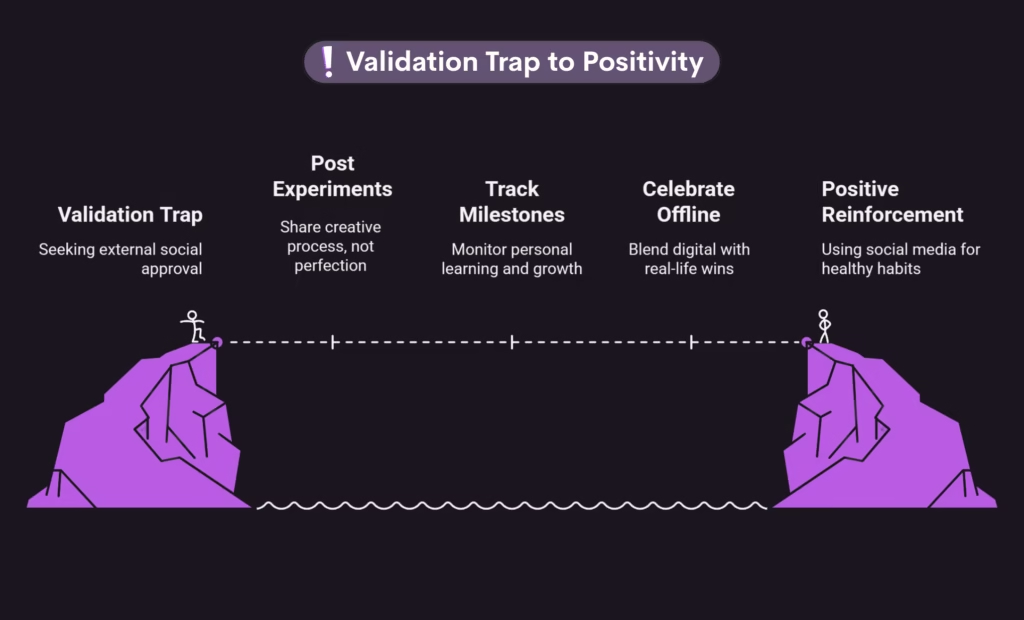
The risk: When the thrill comes only from numbers, the joy can become externalized. Posting feels like chasing validation instead of celebrating progress.
Flip it: Focus on what you feel proud of, not what the algorithm rewards. Celebrate your tiny wins offline too—journals, sticky notes, or telling a friend—and let social media be the cherry on top.
Social Rewards Psychology: Turning Micro-Celebrations into Mental Health Wins
The real magic? Micro-celebrations can improve emotional well-being:
- Lower stress by acknowledging progress
- Boost optimism through small, visible wins
- Increase self-esteem via social reinforcement
Dopamine hits from small wins help regulate mood. Think of them as digital confetti for your brain—frequent, joyful, and surprisingly powerful.
Practical flip: Instead of seeking likes, try reflecting internally: “This small win makes me feel proud”. Over time, the habit flips from external validation → internal motivation.
Designing Your Feed for Positive Impact
You can shape social media to amplify healthy micro-celebrations:
- Curate creators who inspire achievable wins: Seeing realistic success motivates action.
- Track personal progress: Habit trackers, streaks, or journals highlight growth.
- Celebrate friends’ achievements: Reacting positively strengthens reciprocity and social bonds.
- Limit comparison triggers: Unfollow or mute accounts that constantly make you feel small.
When intentional, your feed becomes a tool for reinforcement, motivation, and mood elevation, instead of a comparison minefield.
Micro-Celebrations Across Cultures
Celebrating small wins isn’t the same everywhere:
- Individualistic cultures (US, UK): Openly sharing personal achievements is normalized.
- Collectivist cultures (Japan, China): Success is often highlighted in context of the group, not the individual.
Research highlights the “WEIRD” bias (Western, Educated, Industrialized, Rich, Democratic), showing that a lot of psychology research doesn’t account for global differences. UX designers can tweak features to match cultural expectations—what feels like a win in one country might feel boastful in another.
Social Rewards Psychology: Habits, Gamification & Positive Flips
Micro-celebrations don’t just feel good—they shape habits:
- Tiny wins reinforce routines: James Clear’s Atomic Habits shows small success builds lasting behavior.
- Gamification amplifies engagement: Likes, streaks, and badges in apps keep the loop going.
- Flip it: Use micro-celebrations to build healthy habits:
- Post creative experiments, not just polished work
- Track personal learning or growth milestones
- Celebrate offline wins too, blending digital + real-life motivation
This flips social media from “validation trap” → “positive reinforcement tool.”
Caveats & Mindful Use
Even positive micro-celebrations have limits:
- Too much focus on external validation → anxiety
- “Small wins pressure” can feel competitive or exhausting
- Risk of burnout if celebration becomes performative
Best practice: Celebrate authentically. Internal acknowledgment + occasional external sharing creates a sustainable, uplifting habit.
Want to dive deeper into how your brain’s reward system influences scrolling? Check out Brain Dopamine: Outsmart Social Media Before It Outsmarts You.
Final Thoughts: Confetti for Your Mind
Tiny wins are more than cute—they’re science-backed tools for growth, motivation, and mental well-being.
Flip the habit:
- Celebrate for yourself first
- Let social media be the bonus confetti
- Track small wins consistently—online or offline
Ask yourself today: “What tiny win can I celebrate, and how will I acknowledge it in a way that feels good?”
Even a tiny doodle, a small project, or finishing a task counts. Every micro-win sparks motivation, joy, and a ripple effect in your digital and real-life world.
Social rewards psychology proves it: small moments matter. Make them count.
Frequently Asked Questions
Rewards trigger your brain’s dopamine system, which makes you feel pleasure and motivates you to repeat certain behaviors. Basically, when you get a reward, your brain says, “Yup, that felt good—let’s do it again!” This applies to everything from finishing a task to getting a compliment.
Likes act as tiny social rewards. Each like gives your brain a small dopamine boost, signaling approval or connection. That’s why a post with more likes can make you feel extra validated, motivated, or even a little “addicted” to checking notifications.
Karl Weick’s theory says breaking big goals into small, manageable wins helps people feel progress, even in challenging situations. Each small win builds confidence, encourages action, and reduces the fear of failing at the bigger goal.
Celebrating small wins reinforces positive behavior, builds confidence, and motivates you to keep going. Even tiny achievements signal to your brain that progress is happening, which keeps you moving forward without feeling overwhelmed.
Small celebrations reduce stress, boost optimism, and improve self-esteem. By acknowledging progress—even tiny steps—you create positive feedback loops that enhance mood and resilience, making it easier to stay motivated and feel good about yourself.